Personality Types and Your Life Choices
It’s September. It’s back to school for a lot of people. Some are enrolled in programs they aren’t really sure about but the idea of taking a year off to go to work to figure things out doesn’t appeal to them either. For those of you that did take that year off maybe getting to know your personality types might give you new knowledge to apply for a program next year. Others continue the weekly routine in the career choice they made decades ago, only occasionally entertaining thoughts of changing jobs or careers but deciding they’re fine just where they are. Other people have a slight variation to this and have a number of other projects and goals or passions they pursue when they have time.
People make choices about what they’re going to do with their lives based on different factors. Some may have looked up to someone when they were growing up who served as a role model for them in some way and followed the same path. Midway on that path some decided, “this is not for me” and changed program or dropped out. Others continued the path and found satisfaction following in other footsteps. How do people come to these conclusions about their life choices and get on any path at all. Carl Jung argued that there is something called Personality types and everyone falls into these. They are conscious or unconscious. Carl Jung referred to this as the collective unconscious. Carl Jung believed that personality manifested itself through something called Archetypes. These archetypes are categorized based on a different style of personality patterns.
These different types are based on general attitudes and psychological function. There are four different psychological functions, and they are the following:
--Extroversion vs. Introversion
--Sensation vs. Intuition
--Thinking vs. Feeling
--Judging vs. Perceiving
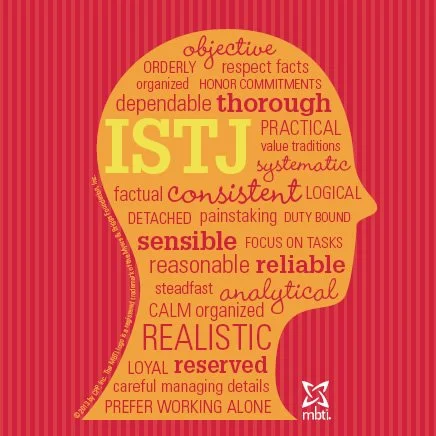
Carl Jung’s Theory led to the development of the popular Myers Briggs Type Indicator. For those of you unfamiliar with the MBTI, you may want to give it a try. It could give you some ideas, if you’re considering a career change or change of educational program of study or starting one. The different learning styles are the following:
--Extroverted: Extroverted types get their energy by being around other people. They are highly social and thrive on teamwork and working in groups. They learn best by direct, hands-on experience. They value sharing ideas and tasks. They are highly self-motivated, requiring little guidance.
--Introverted: They absolutely love quiet and enjoy working alone. Their ideas are generated from internal sources. They are highly reflective, preferring to listen and watch. They learn through observation of skills rather than jumping right in.
--Sensing: They are interested in the external environment and the physical world. They are methodical, paying attention to details, and they don’t mind repetitive work. They are concrete thinkers and don’t care for the abstract. It also takes them longer to solve problems.
--Intuitive: They work in short blocks of time and don’t finish everything all at once. They enjoy new experiences and situations. They are able to see the forest for the trees. They enjoy theories and the abstract.
--Thinking: These types make use of logic and rationality when problem solving and making decisions. Thier decisions are based on personal ideas of right and wrong, on fairness and justice. They have a high interest in logic and patterns. They tend to make decisions based on reason and logic.
--Feeling: These types process information based on the feeling it creates. They are interested in people and feelings. They are perceptive of their own and others' emotions. Their decision-making process comes from how they feel.
--Judging: Judging types are very decisive, sometimes making hasty decisions. They like to plan things out and enjoy structure over chaos. Everything is carefully planned out. They are detail-oriented, and highly organized. They do not enjoy mystery. They stand by their decisions. They are opinionated and love to follow the rules.
--Perceiving: These types of people are impulsive, and their decisions can change. They are flexible, disliking structure. They sometimes have a hard time making decisions.
If you recognized yourself in one of the learning styles, feel free to learn from the other styles to enhance your learning style. For example, if you know you enjoy quiet reading, attend a conference. This is also a good challenge for your brain.
If you are struggling to find direction in your life and are feeling lost and are having a hard time coping, know that this is normal during transitional moments in life. If you need someone to help you with this transition, please visit www.saraperrettatherapy.com and book your consultation today.
FOUR PSYCHOLOGICAL FUNCTIONS --Extroversion vs. Introversion
--Sensation vs. Intuition
--Thinking vs. Feeling
--Judging vs. Perceiving